
"export preparation"
3000 article(s) found

Brazil Santos Coffee Bean Region Topics Brazil Santos Coffee Flavor Properties
Professional coffee knowledge exchange More coffee bean information Please pay attention to Coffee Workshop (Weixin Official Accounts cafe_style) Brazil, one of the world's largest coffee producing and exporting countries that can be praised as coffee continent, accounting for about 1/3 of all world production. It is especially famous for Brazil Santos coffee, exported from Puerto Santos, São Paulo state, and the green beans are large and pale green

Coffee picking and processing methods Flavor description of taste grinding scale production area
There are two ways to prepare coffee beans for the roasting process. The method chosen has a significant impact on the final value and quality of coffee. The cheapest method of processing is called drying, which is used for lower-grade coffee beans, while higher-quality coffee beans are processed by wet treatment. Drying method is used for

Costa Rican Coffee flavour Costa Rican Coffee Taste Manor
S.H.B. It is a very hard bean with an altitude of more than 1500 meters above sea level, which means high quality Costa Rican coffee. This extra-hard coffee bean suitable for medium and heavy roasting has a strong sour taste and charming aroma. Costa Rican SHG coffee is usually full-grained, the flavor is clear, the acidity is bright and the consistency is ideal. The strong flavor makes the tail rhyme reverberate in the throat for a long time.

A brief introduction to the flavor, taste and aroma characteristics of Mexican boutique coffee beans with special taste
Mexicans are optimistic and enthusiastic, and it can also be seen from their coffee that the mellow Mexican coffee is not only loved by the native people, but also praised by many coffee connoisseurs. There are many ways to taste Mexican coffee, mainly divided into alcoholic and non-alcoholic practices. Coffee growing areas in Mexico are mainly concentrated in the southeastern highlands.

Costa Rican Yersalo Coffee Flavor description, Grinding degree treatment, Taste characteristics, Fine Coffee introduction
In the 1820s, the independence movement in Latin America was high, and Costa Rica declared its independence in 1821. Incorporated into the Iturvid Empire of Mexico in 1822. He joined the Union of Central America in 1823. The Republic of Costa Rica was founded in 1848. From 1821 to 1870, the Costa Rican regime was mainly controlled by J.R. Morapolas and J.M. The economy is booming in the hands of the two Montealegre families.

Columbia boutique coffee grade: Supremo and others
As a segment of the entire coffee market, boutique coffee accounts for about 10-15%, which is about equivalent to the annual harvest in Colombia. In view of the good development of the boutique coffee market, the Colombian growers Association FNC has started to promote the country's boutique coffee industry since 1996. At present, Colombian boutique coffee is mainly exported to Japan and the United States, and a small part to Canada.

A brief introduction to the planting Market Price of Mexican Fine Coffee Bean varieties with good fragrance
Non-alcoholic Mexican coffee often goes with milk. Heat a cup of milk, a teaspoon of cinnamon powder and a teaspoon of vanilla powder in a pot at medium temperature, not too hot, and do not boil the milk. Then add the cocoa powder, fully dissolve and stir well. If you like chocolate, you can use chocolate paste instead of cocoa powder and milk. Let the milk dry for about 5 minutes until the cow

Do this, mocha Italian latte, mocha coffee, Ethiopian mocha beans, Arabica coffee beans.
Mocha coffee (also known as mocha or mocha, also translated as Arabian quality coffee, English CafMocha, meaning chocolate coffee) is a variant of Italian latte (CafLatt). Like the classic Italian latte, it is usually made of 1/3 espresso (CaffEspresso) and 2/3 foam, but it is also mixed with a small amount.

Classification of Ugandan coffee beans in Uganda, the second largest coffee producer in Africa
Uganda is the second largest coffee producer in Africa, the fourth largest Robusta coffee producer and the tenth largest coffee producer in the world. One out of every 10 coffee farms in the world is located in Uganda, where 1.7 million coffee households account for 10 per cent of global farms. Coffee production in Uganda may still be feasible in the coming decades, but future environmental scenarios require us to start now.
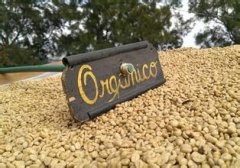
A brief introduction to the cultivation of Mexican boutique coffee beans with good fragrance, geography, climate and altitude
Non-alcoholic Mexican coffee often goes with milk. Heat a cup of milk, a teaspoon of cinnamon powder and a teaspoon of vanilla powder in a pot at medium temperature, not too hot, and do not boil the milk. Then add the cocoa powder, fully dissolve and stir well. If you like chocolate, you can use chocolate paste instead of cocoa powder and milk. Let the milk dry for about 5 minutes until the cow
The classification of coffee beans the essentials of distinguishing coffee beans
● 's key to distinguishing coffee beans has recently been increasing the number of unroasted raw coffee bean stores across the country in response to the gourmet needs of customers. In the store, you can personally choose what you like from the raw coffee on display, and some stores can also bake it for you on the spot. In this way, you can taste the fried and fragrant coffee at home. Here, it will be

A brief introduction to the history and culture of the origin and development of Mexican boutique coffee beans with special taste
Mexicans are optimistic and enthusiastic, and it can also be seen from their coffee that the mellow Mexican coffee is not only loved by the native people, but also praised by many coffee connoisseurs. There are many ways to taste Mexican coffee, mainly divided into alcoholic and non-alcoholic practices. Coffee growing areas in Mexico are mainly concentrated in the southeastern highlands.

Introduction to the blending method of Italian Coffee and single Coffee
Indonesia AP-1 is located in Java, Indonesia, robusta coffee, sweat-resistant and insect-resistant; bitter taste, but bitter with fragrance, especially after cooling with a unique sweet taste, suitable for the preparation of cold coffee, is mellow and extremely bitter. Tanzania Kilimanjaro Tanzania Chag AA Coffee (Chagga AA) is famous for its full-grained and fragrant quality. Brazilian texture

Introduction to Costa Rican Coffee Manor Costa Rican Coffee Flavor
The strategy includes four aspects: first, to win financial support from the government and to establish a coffee trust fund to help coffee growers with difficulties tide over their cash flow difficulties. Second, vigorously develop high-quality coffee, increase the added value of coffee exports, and make up for the losses caused by the fall in coffee prices. Its main approach is to focus on the development of high-quality coffee varieties ranging from 1000 to 1500 meters above sea level.

A brief introduction to the market price of Mexican boutique coffee beans with elegant taste and moderate sour taste
Mexican coffee-growing areas are mainly concentrated in the southeastern highlands, near Guatemala. Most of the mountains in the south are volcanic areas, and the volcanic ash soil is not only conducive to the drainage of coffee roots, but also provides sufficient nutrients for the growth of coffee trees. Most of the coffee varieties planted are Kaddura, Tibica, bourbon, etc., and the treatment methods are mostly water washing treatment, which are classified according to altitude. Coffee beans

A brief introduction to the history and culture of the origin and development of Mexican boutique coffee beans
Indeed, after drinking Mexican coffee, it really has the effect of forgetting worries and getting rid of troubles. Mexican coffee has a strong low taste, rich aroma, although slightly bitter but very mellow, has a unique and strong flavor, is a wonderful product of afternoon tea, should be carefully tasted. It is also the best choice for mixing other coffees and the first sip of coffee that beginners should taste. Taste Mexican coffee, it's best to drink it while it's hot.

A brief introduction to the cultivation of Mexican boutique coffee beans with special and elegant taste, geographical location, climate and altitude
Aldura coffee beans are the top coffee beans in Mexico. This kind of coffee beans have large granules, with strong sweet, sour and good aroma. About 5 times of Mexico's national area are plateaus and mountains, with an annual average temperature of 2527 ℃. The Mexican plateau has a mild climate all the year round, with mostly plateau topography, no cold winter, no hot summer, and evergreen trees all the year round.
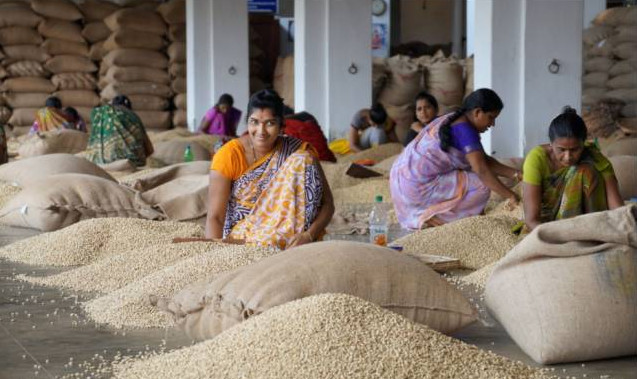
Indian Monsoon Coffee Malabar| Unique monsoon treatment, origin of wind-stained malaba
Monsooned Malabar Country: Southern IndiaRegion: Southern India Malabar Coast Altitude: 1100-1200 m Variety: Kents, S795, Catimor, selection 9 Treatment: Wind-stained Sunlight Treatment 01 Introduction Coffee was brought in by pilgrims as early as the 16th century to establish the first coffee farms. You might not imagine

A brief introduction to the treatment method of grinding degree and baking degree of Mexican boutique coffee beans with good fragrance
Another way to match Mexico's most famous tequila with coffee is to pour a small glass of tequila at the bottom of the cup, followed by milk and coffee, preferably decorated with cream and cinnamon. Tequila is a wine with great stamina. If you have enough courage, you might as well try this alternative coffee. Indeed, after drinking Mexican coffee, I really forget my worries and get rid of my troubles.

Description of Costa Rican Coffee Flavor introduction of taste characteristics of high-quality coffee beans in producing areas
First, we should seek financial support from the government and set up a coffee trust fund to help coffee growers with difficulties tide over their cash flow difficulties. Second, vigorously develop high-quality coffee, increase the added value of coffee exports, and make up for the losses caused by the fall in coffee prices. The main approach is to focus on the cultivation of high-quality coffee from 1000 meters to 1500 meters above sea level, and to prohibit the collection of immature coffee.